

Choosing a Jewelry Microscope for gemstone inspection requires more than simply looking at the highest magnification number. A suitable Jewelry Microscope should provide clear optical images, practical working distance, stable focusing, comfortable viewing, and suitable illumination. When inspecting gemstones, the goal is to see small details clearly while keeping the stone, tools, and hands easy to position.
A Jewelry Microscope can be used to examine gemstone surfaces, facets, edges, inclusions, settings, polishing marks, scratches, and other visible details. Different inspection tasks may require different optical configurations, so understanding how a Jewelry Microscope Works and what to check before purchasing can make the selection process much more practical.
This guide explains the main factors to consider when choosing a Jewelry Microscope for gemstone inspection, including magnification, optical clarity, working distance, illumination, focusing, viewing comfort, mechanical stability, and application requirements.

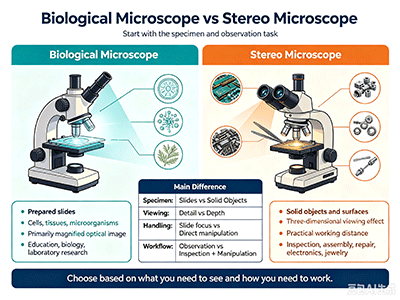
A Jewelry Microscope is an optical inspection instrument designed for close observation of jewelry, gemstones, small components, and fine workmanship. Compared with ordinary visual inspection, a Jewelry Microscope enlarges small details so that users can examine areas that are difficult to see with the naked eye.
For gemstone inspection, a Jewelry Microscope is particularly useful because gemstones contain many small surfaces, facets, edges, and internal or surface features. The ability to position the stone under controlled magnification allows the operator to inspect details without repeatedly moving the object away from the viewing area.
A Jewelry Microscope may also be used during jewelry manufacturing, stone setting, repair, polishing inspection, quality control, and routine examination. The correct configuration depends on the type of gemstone, the size of the jewelry piece, the inspection task, and the operator's working habits.
Gemstones are often small and contain details that are difficult to evaluate through unaided vision. Facet junctions, edges, surface marks, polishing conditions, setting areas, and small imperfections may require magnified observation.
A Jewelry Microscope provides a more controlled way to inspect these areas. Instead of relying only on visual estimation, the operator can position the gemstone under the optical system and adjust the focus until the required area becomes clear.
Another important advantage of a Jewelry Microscope is viewing stability. When examining small stones, even minor hand movement can make detailed observation difficult. A stable mechanical structure and practical focusing system can help maintain a consistent viewing position.
For jewelry professionals, a Jewelry Microscope can also improve the inspection workflow. The operator can keep the gemstone at a suitable working distance while using both hands when the microscope configuration allows sufficient space around the specimen.
Magnification is one of the first specifications people consider when choosing a Jewelry Microscope. However, higher magnification is not automatically better for every gemstone inspection task.
At lower magnification, the operator can normally observe a larger area of the gemstone. This is useful when checking the overall condition, general surface quality, setting position, or relationship between several facets.
Higher magnification allows smaller details to become more visible. It can be useful when examining small scratches, facet edges, polishing marks, tiny workmanship details, and other localized features.
The practical approach is to select a Jewelry Microscope according to the inspection task rather than choosing magnification based only on the largest available number. A Jewelry Microscope should provide useful image detail while maintaining a workable field of view.
When comparing different Jewelry Microscope configurations, consider how often you need to switch between overall observation and detailed inspection. A flexible optical configuration can be more practical than a system designed around only one magnification level.
Optical clarity is critical when selecting a Jewelry Microscope for gemstone inspection. Magnification only enlarges an image; it does not automatically make that image useful. If the optical image is unclear, increasing magnification may simply make an unclear image appear larger.
A good Jewelry Microscope should provide a clean and stable image across the intended observation range. The operator should be able to distinguish edges, surface details, facet boundaries, and small workmanship features without excessive visual distraction.
When evaluating a Jewelry Microscope, look at the actual image rather than relying only on product specifications. If possible, inspect a gemstone with different surface textures and shapes. Check whether the image remains clear when moving from one area to another.
Optical components are particularly important for professional inspection because the microscope may be used repeatedly throughout the working day. Clear optics can make detailed observation more comfortable and reduce the need for repeated repositioning.
Working distance is another major consideration when choosing a Jewelry Microscope. It describes the practical space between the optical system and the object being observed.
A suitable working distance gives the operator enough room to position a gemstone, jewelry setting, tweezers, cleaning tools, or other inspection equipment. This is especially important for jewelry work because the operator may need to manipulate the object while observing it.
If the working distance is too short for the intended task, the microscope may become difficult to use with tools. The operator may need to move the object repeatedly or work in an uncomfortable position.
A Jewelry Microscope with a practical working distance can make gemstone inspection easier because the operator can maintain a stable viewing position while adjusting the specimen.
Before selecting a Jewelry Microscope, consider the actual size and shape of the objects you inspect. A loose gemstone may require different positioning space from a complete ring, necklace, setting, or assembled jewelry component.
Lighting strongly affects gemstone inspection. A Jewelry Microscope can have good optical performance, but unsuitable illumination may make certain surface details difficult to observe.
Different inspection tasks can benefit from different lighting arrangements. Direct illumination may help reveal surface features, while other lighting directions can change how edges, facets, textures, and reflective surfaces appear.
Gemstones can be highly reflective, so excessive or poorly positioned light may create glare. The operator should be able to observe the required area without being distracted by strong reflections.
When selecting a Jewelry Microscope, consider whether the illumination system can provide practical control for the types of gemstones and jewelry you normally inspect. The goal is not simply to make the object bright. The goal is to create an image in which relevant details can be distinguished clearly.
Precise focusing is essential for gemstone inspection. Gemstones contain multiple surfaces at different positions, so the operator needs to adjust focus accurately to examine a particular facet, edge, or surface area.
A Jewelry Microscope should provide focusing control that is smooth and easy to operate. If the focus mechanism is difficult to adjust, detailed inspection can become tiring, particularly during repeated quality checks.
Stable focusing is also important. After the desired focus is achieved, the viewing position should remain stable while the operator examines the gemstone or moves it slightly.
When testing a Jewelry Microscope, adjust the focus several times and observe how the image responds. Check whether small adjustments produce predictable changes. This simple test can reveal a lot about how practical the microscope will be during daily work.
Observation comfort is easy to overlook when purchasing a Jewelry Microscope. However, gemstone inspection may involve long periods of close observation, making the viewing arrangement an important part of the overall user experience.
A Binocular Jewelry Microscope allows observation through both eyes and can provide a more natural viewing experience for many inspection tasks. The operator can adjust the viewing position according to the microscope configuration and personal working habits.
Comfort also depends on the position of the microscope, the height of the workbench, the distance between the operator and the instrument, and the frequency of specimen movement.
For professional Jewelry Inspection, a comfortable Jewelry Microscope should support a working position that does not require excessive leaning, stretching, or repeated head movement.
Not every gemstone inspection task is the same. A Jewelry Microscope Used for loose gemstones may have different requirements from one used for finished rings or mounted stones.
Small loose stones may require precise positioning and stable holding. Mounted gemstones may require more space around the setting because the operator needs to inspect areas that are partly surrounded by metal.
Large jewelry pieces can also require more flexible positioning. Before purchasing a Jewelry Microscope, list the objects that will be inspected most frequently.
Consider gemstone size, jewelry shape, setting structure, inspection angle, and whether tools need to be used during observation. This practical information helps determine whether the chosen Jewelry Microscope will fit the actual workflow.
A Jewelry Microscope can support several stages of gemstone-related work. During incoming inspection, it can help operators examine visible surface conditions and workmanship details.
During jewelry manufacturing, a Jewelry Microscope can be used to observe stone settings, edges, small components, and areas that require close visual checking. During repair work, magnified observation can help the operator work around Small Parts with greater visual control.
For polishing inspection, the Jewelry Microscope can help reveal surface details that are difficult to see under normal viewing conditions. For quality control, it can provide a consistent magnified observation method for checking specific areas.
The actual inspection method should always match the gemstone, jewelry design, lighting conditions, and professional inspection requirements. A microscope provides magnification and observation support; it does not replace appropriate identification or testing procedures when specialized gemstone analysis is required.
| Selection Factor | What to Check | Why It Matters |
|---|---|---|
| Magnification | Useful observation range | Determines how much detail can be viewed |
| Optical clarity | Image sharpness and consistency | Supports detailed gemstone observation |
| Working distance | Space between optics and specimen | Allows practical handling and tool access |
| Illumination | Brightness and lighting arrangement | Helps reveal surface and facet details |
| Focusing | Smoothness and stability | Makes precise observation easier |
| Viewing comfort | Eyepiece position and working posture | Supports longer inspection sessions |
| Mechanical stability | Stand and adjustment structure | Reduces unwanted movement during inspection |
A Jewelry Microscope should have a stable mechanical structure because gemstone inspection often involves very small visual details. Movement in the microscope or specimen can make the image shift and interrupt observation.
Mechanical stability is particularly important when inspecting facet edges, small surface marks, jewelry settings, and tiny components. The operator should be able to adjust the microscope without introducing unnecessary movement into the observation process.
When evaluating a Jewelry Microscope, operate the focusing mechanism, move the specimen, and adjust the viewing position. Observe whether the microscope remains stable throughout these actions.

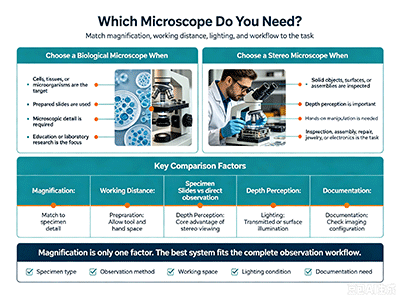
Some gemstone inspection workflows may benefit from digital imaging. A digital imaging configuration can make it easier to display an enlarged view on a screen, share an observation with another person, or keep visual records when the equipment supports these functions.
However, digital capability should be selected according to the actual workflow. If the main task is direct optical observation, the optical performance and ergonomic design of the Jewelry Microscope remain important.
For inspection teams, digital imaging can be useful when several people need to view the same gemstone or when images are required as part of internal documentation. The exact imaging requirements should be determined before selecting accessories or additional equipment.
Before purchasing a Jewelry Microscope, prepare several representative inspection samples. These samples should include the gemstone types, jewelry shapes, and surface conditions that operators normally encounter.
Use the samples to evaluate the Jewelry Microscope under realistic working conditions. Check the image at different magnification levels, adjust focus, change the observation area, and evaluate illumination.
It is also useful to observe how easily the operator can position the gemstone. A Jewelry Microscope may have suitable optical performance but still be inconvenient if the work area does not provide enough space for normal inspection.
For manufacturers and professional users, checking the complete configuration is also important. Confirm the microscope body, optical components, illumination, stand, accessories, packaging, documentation, and applicable inspection or certification documents included with the order.
Define the gemstone and jewelry inspection tasks.
Choose a useful magnification range rather than focusing only on maximum magnification.
Check optical clarity using actual inspection samples.
Confirm that the working distance suits the jewelry and tools being used.
Evaluate illumination for reflective gemstone surfaces.
Test focusing control for smooth and precise adjustment.
Check binocular viewing and operator comfort when required.
Evaluate the stability of the microscope stand and mechanical structure.
Consider digital imaging if inspection records or shared viewing are required.
Confirm the complete product configuration before placing an order.
One common mistake is choosing a Jewelry Microscope only according to magnification. High magnification without suitable optics, lighting, working distance, or focusing control may not improve the actual inspection process.
Another mistake is ignoring working distance. Jewelry inspection often involves tools and small objects, so the available space around the gemstone matters.
Some buyers also overlook operator comfort. If a Jewelry Microscope is used for several hours each day, viewing position and focusing operation can affect the overall working experience.
It is also important not to choose accessories simply because they are available. Each accessory should have a clear purpose within the inspection workflow.
The right Jewelry Microscope should be selected according to the complete inspection process. Start by identifying what needs to be observed, how large the gemstones are, how the jewelry is positioned, and what level of detail is required.
Next, compare optical clarity, magnification, working distance, illumination, focusing, viewing configuration, and mechanical stability. These factors work together. A Jewelry Microscope with balanced characteristics can be more useful in daily gemstone inspection than one that focuses heavily on a single specification.
For professional users, practical testing is strongly recommended. Place representative gemstones under the Jewelry Microscope and perform the same inspection tasks that operators will perform after installation. This approach provides more useful information than comparing specifications alone.
When purchasing a Jewelry Microscope from a manufacturer, buyers should also consider production inspection and delivery requirements. Before shipment, the microscope should be checked for assembly condition, optical performance, focusing and mechanical functions, and appearance according to the agreed product configuration.
Packaging is another practical consideration. A Jewelry Microscope contains optical and mechanical components that should be protected during transportation. Suitable inner cushioning, dust protection, individual packaging, and reinforced outer cartons can help reduce transportation-related risks.
For international orders, buyers should confirm the microscope configuration, accessories, user documentation, applicable certification or inspection documents, shipping method, payment terms, and packaging requirements before production begins.
Choosing a Jewelry Microscope for gemstone inspection is mainly about matching the optical and mechanical configuration with the real inspection task. Magnification is important, but it should be considered together with optical clarity, working distance, illumination, focusing, viewing comfort, and mechanical stability.
A practical Jewelry Microscope should make it easier to observe gemstone surfaces, facets, edges, settings, and fine workmanship details without creating unnecessary difficulties for the operator. Before making a purchasing decision, test representative gemstones and evaluate the complete working process rather than focusing on one specification.
For jewelry manufacturers, gemstone inspectors, repair professionals, and quality control teams, a properly selected Jewelry Microscope can become an important part of routine close-up inspection. By starting with the actual application and then comparing the optical, mechanical, and ergonomic requirements, buyers can select a Jewelry Microscope that fits their daily gemstone inspection workflow.
Add: No.70 Zhenxing East Road, Zhangshui Town,Haishu District,Ningbo City,Zhejiang,China
Contact Person: Mr. Xu Contact Number:+86 13777211956
Tel:+86 574-88152588/574-88152566
Fax:+86 574-88152570
Post Code:315161
E-mail:chinahg@hgopt.com
邮箱

本网站使用 cookie 来确保您在我们的网站上获得最佳体验。
 English


 Whatsapp
 电话
电话 邮箱
邮箱 留言
留言
评论
(0)